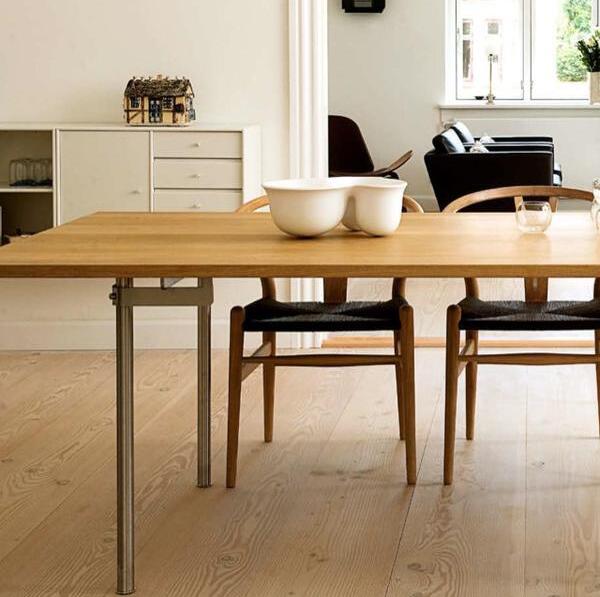
The structural form of a Wood Dining Table is crucial to its longevity and stability, especially considering the natural movement of solid wood. The core challenge in solid wood furniture craft design lies in accommodating the inevitable expansion and contraction of its components while maintaining the overall appearance and functionality. This essentially means providing sufficient margin for this natural movement. Three common structural forms address this challenge: screw connection between the desktop and the frame structure, slot tenon, and through-band tenon.
Structural performance, in terms of long-term stability and resistance to deformation, generally ranks as follows: screw connection between the desktop and the frame structure < slot tenon < through-band tenon. This is a key consideration when selecting any Wood Dining Table, from a simple kitchen piece to a more elaborate High End Wood Dining Table.
Screw Connection Between the Desktop and the Frame Structure
This method involves using screws to create a rigid connection between the supporting structure (the frame or legs) and the tabletop. However, the stress on the tabletop panel is often inconsistent with the direction of the hardware's constraint, making the desktop susceptible to cracking. For instance, during summer, when the tabletop absorbs moisture and expands, the frame remains relatively stable. This discrepancy can cause the tabletop to bulge. Conversely, in winter, as the tabletop loses moisture and shrinks, the rigid frame resists this contraction, leading to potential cracks in the wood.
This structural approach is the most widely used due to its straightforward manufacturing process. Consequently, many lower-priced dining tables on the market, including some basic Restaurant Wood Dining Table options, employ this method. Identification is simple: the underside of the tabletop will typically reveal numerous screw holes.
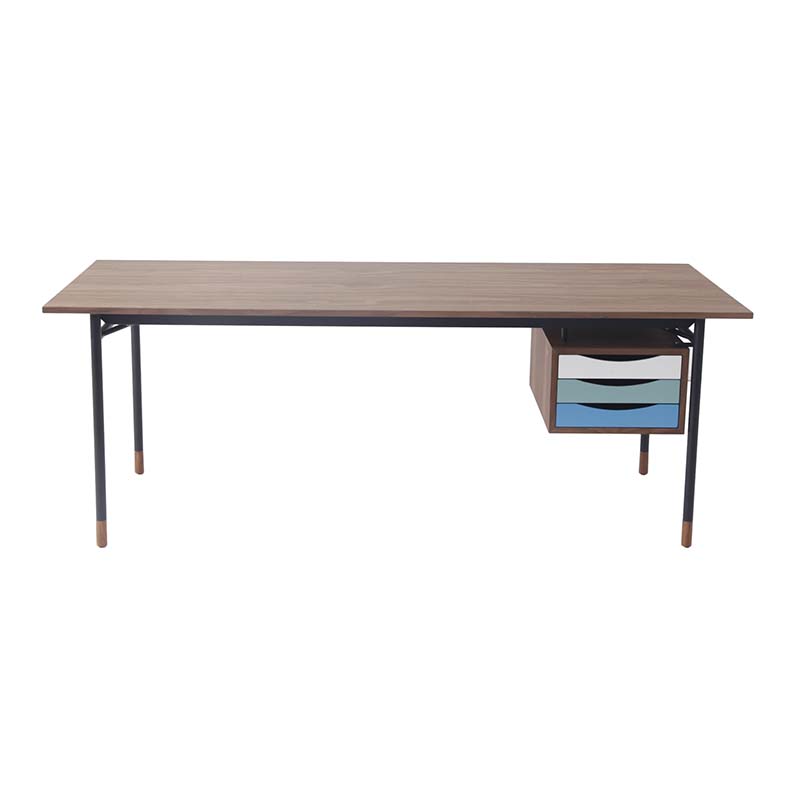
Slide Slot Tenon
In this structure, slots are created within the frame, and small wooden blocks, acting as tenons, are fixed to the underside of the tabletop. As the tabletop expands or contracts with changes in humidity and temperature, these tenons slide within the slots. By allowing for this movement, this structure mitigates the issue of cracking to some extent. However, the initial rigid connection between the tabletop and the frame is effectively reduced to point-to-point contact at the tenons. Over time, this can compromise the restriction on the tabletop's distortion, potentially leading to decreased structural stability, even in a seemingly stable Wooden Round Dining Table. The presence of both screw holes and small wooden blocks on the back of the tabletop indicates this type of construction.
Threading Tenon (Through-Band Tenon)
Here, the top of the supporting structure is crafted into a dovetail track, wider at the top and narrower at the bottom. A corresponding slide slot is created at the appropriate position on the tabletop. The tabletop is then slid into this track from both sides to secure it. This ingenious design allows the tabletop to freely expand and contract along the track in response to seasonal changes, significantly reducing the likelihood of cracking. Simultaneously, the dovetail track firmly constrains the tabletop within a single plane, preventing bulging and deformation – effectively addressing the two primary structural challenges in table construction. Furthermore, the entire structure remains concealed within the tabletop, resulting in a clean and uncluttered appearance, highly desirable for a High End Wood Dining Table.
The primary drawbacks of this ideal structure are its more complex and time-consuming manufacturing process. Additionally, the creation of the slide requires a relatively robust and material-intensive supporting structure. Despite these challenges, this is considered the most ideal structural form for a Wood Dining Table, as it effectively prevents bulging, deformation, and cracking. A key characteristic is its strength without the need for visible screws (excluding those potentially used for attaching the table legs), making it a true mortise-and-tenon, or through-band tenon, construction, even for a large Restaurant Wood Dining Table where stability under heavy use is paramount.